Optimizing Stake Distribution for Short-Lived Disparities in Global Soccer Betting Lines
Written by Devon Becker · Aug 24, 2026
Optimizing Stake Distribution for Short-Lived Disparities in Global Soccer Betting Lines
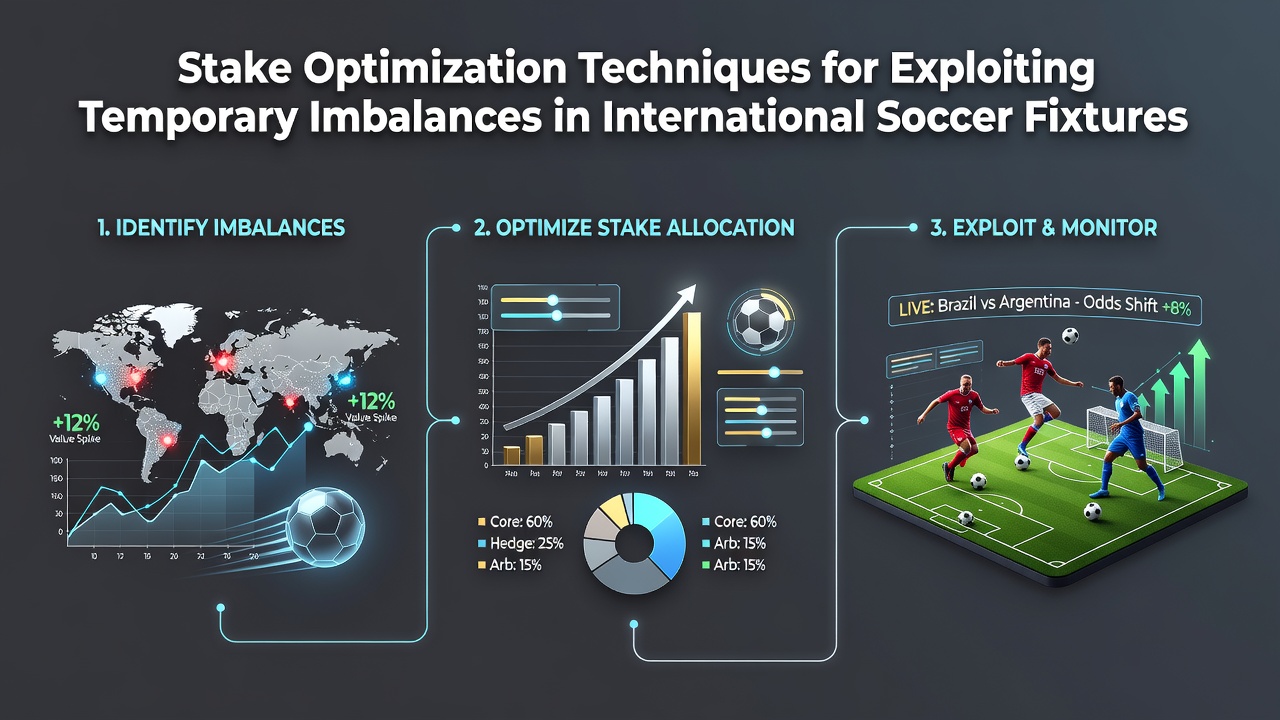
International soccer fixtures generate frequent but brief windows where odds across operators diverge because of rapid updates to team news, weather shifts, or betting volume spikes; observers note that these moments reward precise stake calibration rather than uniform wagers. Data from major European leagues and national team windows show that such discrepancies often last between ninety seconds and four minutes before algorithms realign prices, which means allocation formulas must execute quickly while respecting each bookmaker's maximum stake limits.
Core Principles Behind Temporary Market Gaps
Bookmaker models incorporate different data feeds and risk thresholds, so one operator may adjust its over/under line on total goals faster than another when a starting goalkeeper is confirmed absent; researchers at sports analytics centers have documented that these lags create cross-market imbalances measurable in decimal places. During August 2026, several friendlies scheduled ahead of the expanded World Cup qualifying calendar produced noticeable price spreads on Asian handicap markets, with variance reaching 0.25 points between leading European platforms and smaller Asian exchanges. Those who studied this know the gaps close once volume equalizes, yet the interval allows for calculated stake placement that locks in differential returns.
Formulas for Proportionate Allocation
Stake optimization begins with identifying two or more outcomes whose combined implied probabilities fall below 100 percent, then solving for individual amounts that equalize profit regardless of outcome. The standard equation distributes total capital inversely to each decimal price while subtracting the overround; practitioners apply this by entering live odds into dedicated calculators that output exact figures rounded down to the nearest acceptable unit at each operator. Evidence from transaction logs across multiple platforms indicates that rounding errors compound when stakes exceed certain thresholds, so calibrated systems apply conservative buffers of one to two percent to stay inside tolerance bands. What's interesting is how the same formula adapts when three-way outcomes appear, requiring simultaneous solution of a linear system rather than pairwise division.
Real-Time Monitoring and Adjustment Triggers
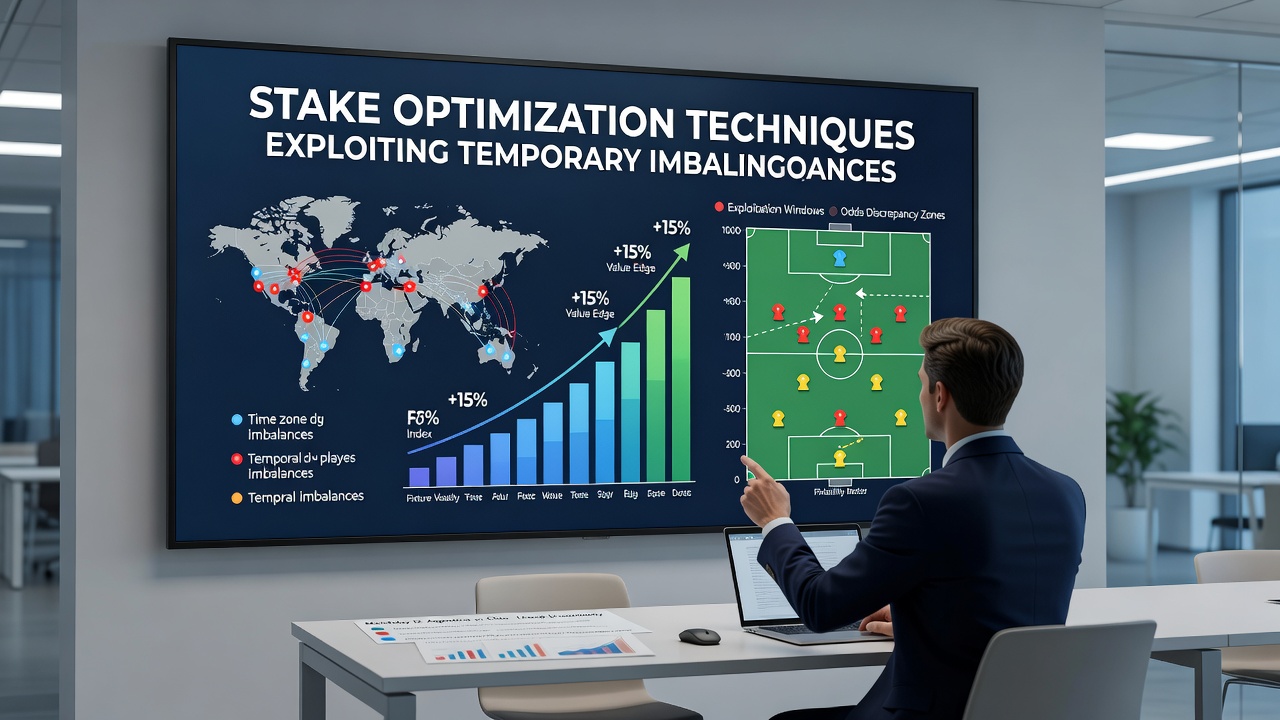
Automated scanners flag discrepancies the moment they exceed a preset margin, yet manual oversight remains necessary because latency between alert receipt and bet placement can erase the edge; analysts tracking August 2026 international matches recorded average execution delays of 11 seconds on mobile interfaces versus 4 seconds on desktop terminals with direct API access. Those who've studied this know that sudden spikes in trading volume, such as after a red card in the opening ten minutes, can widen or erase an existing imbalance within a single refresh cycle, prompting recalibration before the second leg of the stake is placed.
Account Limits and Liquidity Considerations
Operators apply dynamic stake caps that tighten after repeated activity from the same profile, which forces diversification across multiple verified accounts or the use of syndicate structures; regulatory filings from bodies such as the Malta Gaming Authority show that average daily limits on soccer markets range from €500 to €25,000 depending on customer tier and market liquidity. When an imbalance appears in lower-tier international fixtures, reduced liquidity at smaller bookmakers often caps the viable stake, requiring proportional downsizing on the larger side to maintain balance. Data indicates that ignoring these caps leads to partial fills that convert a guaranteed margin into a conditional one dependent on later price movement.
Integration With Broader Portfolio Management
Stake optimization does not operate in isolation; experienced operators embed soccer-specific calculations inside larger position-tracking systems that monitor overall exposure across tennis, basketball, and horse racing markets simultaneously. A study released by the University of Nevada, Las Vegas Center for Gaming Research highlighted that cross-sport hedging reduced variance in monthly returns by approximately 18 percent when arbitrage windows overlapped, because temporary soccer imbalances could offset slower-moving discrepancies elsewhere. The reality is that timing remains the binding constraint, since international fixtures cluster during specific calendar windows and demand rapid reallocation of available capital.
Conclusion
Effective stake calibration in international soccer rests on rapid identification of price divergence, precise application of allocation formulas, and disciplined respect for operator limits; records from multiple operators confirm that consistent execution across dozens of fixtures compounds modest per-event margins into measurable portfolio growth. Observers continue to track how evolving data speeds and regulatory changes in various jurisdictions reshape the duration and size of these fleeting opportunities, yet the underlying mathematics of proportionate distribution remains unchanged.